martes, 27 de diciembre de 2011

Felices Fechas

Ya he repetido innumerables veces mi deseo original de no mencionar -o al menos envitar- tocar temas religiosos o tocar creencias religiosas, pero me ha resultado imposible.
Quería alejar de mi tarea original usar el argumento del castigo divino o de la existencia de una divinidad que nos ha establecido reglas y tareas para convencer a todo lector de que debemos hacer las cosas bien por nuestro propio bien y por el de nuestros seres más cercarnos. Pero... cada vez veo más paralelismos entre lo
que vengo explicando y lo en lo que (al menos) yo creo.
Durante estas fechas (que para muchos no representan algo más que una explosión comercial y de cosumo) quería llevar algún mensaje inspirado en aquello que celebro. Gracias a Dios no puedo escapar de esa tarea evangelizadora que todos debemos llevar y que mejor que me quite del medio y use palabras del máximo representante del catolicismo:

"...
La Navidad es Epifanía: la manifestación de Dios y de su gran luz en un niño que ha nacido para nosotros. Nacido en un establo en Belén, no en los palacios de los reyes. Cuando Francisco de Asís celebró la Navidad en Greccio, en 1223, con un buey y una mula y un pesebre con paja, se hizo visible una nueva dimensión del misterio de la Navidad. Francisco de Asís llamó a la Navidad «la fiesta de las fiestas» – más que todas las demás solemnidades – y la celebró con «inefable fervor» (2 Celano, 199: Fonti Francescane, 787). Besaba con gran devoción las imágenes del Niño Jesús y balbuceaba palabras de dulzura como hacen los niños, nos dice Tomás de Celano (ibíd.). Para la Iglesia antigua, la fiesta de las fiestas era la Pascua: en la resurrección, Cristo había abatido las puertas de la muerte y, de este modo, había cambiado radicalmente el mundo: había creado para el hombre un lugar en Dios mismo. Pues bien, Francisco no ha cambiado, no ha querido cambiar esta jerarquía objetiva de las fiestas, la estructura interna de la fe con su centro en el misterio pascual. Sin embargo, por él y por su manera de creer, ha sucedido algo nuevo: Francisco ha descubierto la humanidad de Jesús con una profundidad completamente nueva. Este ser hombre por parte de Dios se le hizo del todo evidente en el momento en que el Hijo de Dios, nacido de la Virgen María, fue envuelto en pañales y acostado en un pesebre. La resurrección presupone la encarnación. El Hijo de Dios como niño, como un verdadero hijo de hombre, es lo que conmovió profundamente el corazón del Santo de Asís, transformando la fe en amor. «Ha aparecido la bondad de Dios y su amor al hombre»: esta frase de san Pablo adquiría así una hondura del todo nueva. En el niño en el establo de Belén, se puede, por decirlo así, tocar a Dios y acariciarlo. De este modo, el año litúrgico ha recibido un segundo centro en una fiesta que es, ante todo, una fiesta del corazón.
Todo eso no tiene nada de sensiblería. Precisamente en la nueva experiencia de la realidad de la humanidad de Jesús se revela el gran misterio de la fe. Francisco amaba a Jesús, al niño, porque en este ser niño se le hizo clara la humildad de Dios. Dios se ha hecho pobre. Su Hijo ha nacido en la pobreza del establo. En el niño Jesús, Dios se ha hecho dependiente, necesitado del amor de personas humanas, a las que ahora puede pedir su amor, nuestro amor. La Navidad se ha convertido hoy en una fiesta de los comercios, cuyas luces destellantes esconden el misterio de la humildad de Dios, que nos invita a la humildad y a la sencillez. Roguemos al Señor que nos ayude a atravesar con la mirada las fachadas deslumbrantes de este tiempo hasta encontrar detrás de ellas al niño en el establo de Belén, para descubrir así la verdadera alegría y la verdadera luz.
Francisco hacía celebrar la santa Eucaristía sobre el pesebre que estaba entre el buey y la mula (cf. 1 Celano, 85: Fonti, 469). Posteriormente, sobre este pesebre se construyó un altar para que, allí dónde un tiempo los animales comían paja, los hombres pudieran ahora recibir, para la salvación del alma y del cuerpo, la carne del Cordero inmaculado, Jesucristo, como relata Celano (cf. 1 Celano, 87: Fonti, 471). En la Noche santa de Greccio, Francisco cantaba personalmente en cuanto diácono con voz sonora el Evangelio de Navidad. Gracias a los espléndidos cantos navideños de los frailes, la celebración parecía toda una explosión de alegría (cf. 1 Celano, 85 y 86: Fonti, 469 y 470). Precisamente el encuentro con la humildad de Dios se transformaba en alegría: su bondad crea la verdadera fiesta.
Quien quiere entrar hoy en la iglesia de la Natividad de Jesús, en Belén, descubre que el portal, que un tiempo tenía cinco metros y medio de altura, y por el que los emperadores y los califas entraban al edificio, ha sido en gran parte tapiado. Ha quedado solamente una pequeña abertura de un metro y medio. La intención fue probablemente proteger mejor la iglesia contra eventuales asaltos pero, sobre todo, evitar que se entrara a caballo en la casa de Dios. Quien desea entrar en el lugar del nacimiento de Jesús, tiene que inclinarse. Me parece que en eso se manifiesta una cercanía más profunda, de la cual queremos dejarnos conmover en esta Noche santa: si queremos encontrar al Dios que ha aparecido como niño, hemos de apearnos del caballo de nuestra razón «ilustrada». Debemos deponer nuestras falsas certezas, nuestra soberbia intelectual, que nos impide percibir la proximidad de Dios. Hemos de seguir el camino interior de san Francisco: el camino hacia esa extrema sencillez exterior e interior que hace al corazón capaz de ver. Debemos bajarnos, ir espiritualmente a pie, por decirlo así, para poder entrar por el portal de la fe y encontrar a Dios, que es diferente de nuestros prejuicios y nuestras opiniones: el Dios que se oculta en la humildad de un niño recién nacido. Celebremos así la liturgia de esta Noche santa y renunciemos a la obsesión por lo que es material, mensurable y tangible. Dejemos que nos haga sencillos ese Dios que se manifiesta al corazón que se ha hecho sencillo. Y pidamos también en esta hora ante todo por cuantos tienen que vivir la Navidad en la pobreza, en el dolor, en la condición de emigrantes, para que aparezca ante ellos un rayo de la bondad de Dios; para que les llegue a ellos y a nosotros esa bondad que Dios, con el nacimiento de su Hijo en el establo, ha querido traer al mundo. Amén. ..."

SOLEMNIDAD DE LA NATIVIDAD DEL SEÑOR
HOMILÍA DEL SANTO PADRE BENEDICTO XVI
Basílica Vaticana
24 de diciembre de 2011
 

lunes, 19 de diciembre de 2011

¿Durban o Estrasburgo? (rectificación)

Debo rectificar (más bien complementar) lo que dicho en la entrada inmediata anterior a esta.
No he sido del todo preciso respecto a los acuerdos logrados (fue un error mío por no entrar de lleno en todos los documentos generados durante la reunión de Durban).
A continuación anexo algunos otros logros alcanzados -que de cualquier forma tampoco representan mucho para lo que realmente necesita el planeta.

- Un nuevo Climate Change Conference será hecha del 26 de Noviembre al 7 de Diciembre en Qatar.
- Algunos miembros ya han empezado a contribuir a un fondo llamado Green Climate Fund creado en la reunión de Copenhagen. Este fondo fue diseñado para el apoyo económico hacia actividades, ayudas, ideas e iniciativas que fomenten un cambio en la forma como usamos los recursos, como generamos energía, etc.
http://unfccc.int/files/meetings/durban_nov_2011/decisions/application/pdf/cop17_gcf.pdf

domingo, 18 de diciembre de 2011

¿Estrasburgo o Durban?

Una vez más los medios: televisión, radio, prensa escrita, etc se presentaron expectantes a la reunión que sostuvieron los países europeos para fijar posiciones y estrategias como grupo ante la crisis que enfrentan.
La nota, el hecho, la situación que cubrió la semana, que llenó titulares, que vendió ... digamos pues, fue que Inglaterra decidió (bueno digamos: David Cameron) no unirse a ese plan conjunto.
Luego vendría la ráfaga de noticias alrededor es ésta: Sarkozy no saludó a Cameron!, el representante del partido en coalición con Cameron en el gobierno de Inglaterra no se presentó en la Cámara para escuchar las razones de aquél, la visita de Geihtner por el viejo continente, etc
La salvación de una moneda única copó al mundo entero. Una salvación que pasa por el sacrificio de unos y la no renuncia de estatus, poder y privilegios de parte de otros.
Al mismo tiempo en un ambiente más cálido, veraniego, a miles de kilómetros, escondidos entre playas se reunían representantes del mundo sin la magnificencia del Sr. Sarkozy o la importancia de la Sra. Merkel para ver qué hacer con un fastidioso convenio llamando "Protocolo de Kioto".
Como si salvar el planeta fuera menos importante, demandante o estimulante, los resultados de 11 días de reuniones concluyeron en un menor consenso que aquellas celebradas para salvar el Euro.
A través de los documentos resultantes de las reuniones y de los reportes de medios, el único punto "importante" que pude extraer fue:
- La extensión del Protocolo de Kioto. En un momento en que todos creían que después de los infructuosos intentos de Copenhage y de Cancún, Durban sería la muerte para este acuerdo, al menos se acordó dar un tiempo, una extensión a Kioto.
No es lo que realmente necesitamos (muchos científicos dicen que aunque hoy se detuvieran las emisiones de dióxido de carbono, los efectos de todo lo que hemos arrojado perdurarían decenas de años en el ambiente) pero al menos es algo.
Ya en los días posteriores un hecho similar al que Cameron protagonizó en la cumbre "Euro" -aunque menos mediáticamente cubierto- se produjo: Canadá se retira del protocolo alegando que los mayores emisores como EEUU y China, además de países emergentes como India y China no están en el protocolo ni siquiera de forma no vinculante o voluntaria. Mucha razón tiene el argumento canadiense pero en este momento creo que debemos anteponer el bien común y sumar la mayor cantidad de esfuerzos.

Es realmente triste lo que ha pasado y además poder ver a través de contraposiciones lo que verdaderamente nos está interesando a todos como especie. Es tan evidente que las consecuencias del cambio climático y del calentamiento global nos afecta de manera económica -punto que a todos nos duele- que debería ser el punto de partida para poder ir cambiando pensamientos.
Creo que he tratado de repetir muchas veces en este blog: el potencial que existe en el desarrollo de nuevas fuentes de energía y de la utilización de los millones de toneladas de basura es amplísimo.
Tal vez (creo humildemente) éstos deberían ser más puntos a discutir en este tipo de reuniones.

domingo, 4 de diciembre de 2011

Mensajes de Medjugorje

Ya entrando en el mes que el consumismo llama Navidad y con el fin de recordar (una vez más) cual es el verdadero sentido del tiempo que se acerca, les dejo dos mensajes que nuestra Madre ha dejado em un pequeño pueblo entre las montañas al sur de Bosnia : Medjugorje.

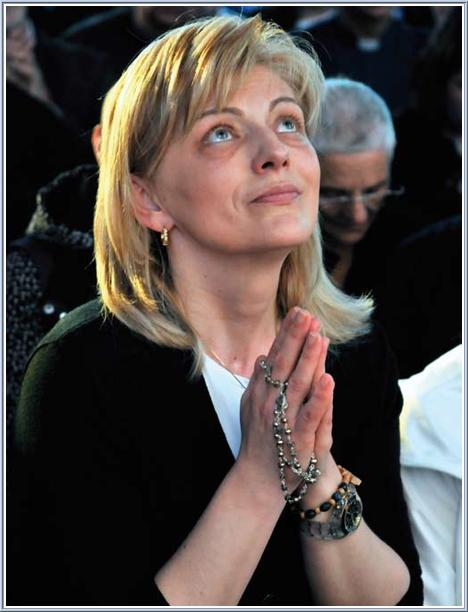
Ultimo Mensaje, 2 de diciembre de 2011 [O] - Aparición a Mirjana

Queridos hijos, como Madre estoy con vosotros para ayudaros con mi amor, oración y ejemplo a convertiros en semilla de lo que sucederá, una semilla que se desarrollará en un árbol fuerte que extenderá sus ramas en el mundo entero. Para convertiros en semilla de lo que sucederá, semilla de amor, orad al Padre que os perdone las omisiones cometidas hasta el momento. Hijos míos, sólo un corazón puro, no agobiado por el pecado, puede abrirse y sólo unos ojos sinceros pueden ver el camino a través del cual os deseo conducir. Cuando comprendáis esto, comprenderéis el amor de Dios y eso os será dado. Entonces, vosotros lo daréis a los demás como semilla de amor. ¡Os agradezco!
 

Ultimo Mensaje, 25 de noviembre de 2011 [O]

¡Queridos hijos! Hoy deseo darles esperanza y alegría. Todo lo que está en torno a ustedes, hijitos, los conduce hacia las cosas terrenales. Sin embargo, yo deseo conducirlos hacia el tiempo de gracia, para que durante ese tiempo estén lo más cerca de mi Hijo, a fin de que El los pueda guiar hacia Su amor y hacia la vida eterna que todo corazón anhela. Ustedes hijitos oren, y que este tiempo sea para ustedes tiempo de gracia para vuestra alma. Gracias por haber respondido a mi llamado.
 

domingo, 20 de noviembre de 2011

Ithaca

Tenía tiempo sin escribir por aquí. Me he vuelto (palabras que pido prestadas de un amigo) un gusano corporativo.
Me ha envuelto nuevamente el día a día de un trabajo en el que prácticamente no hacemos nada. Solamente lidiar con papeles administrativos y procesos burocráticos.
Podrán entonces ustedes disculparme: en estas condiciones se pierde inspiración.

Pero de repente aparecen esas cosas, esas obras, esos destellos, esos brotes de esperanza que te llevan a la luz.
Había leído miles de veces un poema que se titula como he titulado esta "entrada". Lo había visto como quien ve un árbol en su paso a casa o al trabajo todos los días. Pero un día, un día, sin que nada cambie, sin que nada haya alterado la relación entre tu paso y ese árbol, alcanzas a ver que privilegio es tenerlo en tu camino. De repente ves su magnifciencia, su belleza, su poder.
Esa última vez lo vi en un blog que sigo (miguelangelsantos) narrado por Sean Connery.

Les coloco pues en estas líneas la versión que Constantine Cavafy hizo de Ithaca:

When you set sail for Ithaca,
wish for the road to be long,
full of adventures, full of knowledge.
The Lestrygonians and the Cyclops,
an angry Poseidon -- do not fear.
You will never find such on your path,
if your thoughts remain lofty, and your spirit
and body are touched by a fine emotion.
The Lestrygonians and the Cyclops,
a savage Poseidon you will not encounter,
if you do not carry them within your spirit,
if your spirit does not place them before you.
Wish for the road to be long.
Many the summer mornings to be which with
pleasure, with joy
you will enter ports seen for the first time;
stop at Phoenician markets,
and purchase the fine goods,
nacre and coral, amber and ebony,
and exquisite perfumes of all sorts,
the most delicate fragances you can find,
to many Egyptian cities you must go,
to learn and learn from the cultivated.
Always keep Ithaca in your mind.
To arrive there is your final destination.
But do not hurry the voyage at all.
It is better for it to last many years,
and when old to rest in the island,
rich with all you have gained on the way,
not expecting Ithaca to offer you wealth.
Ithaca has given you the beautiful journey.
Without her you would not have set out on the road.
Nothing more has she got to give you.
And if you find her threadbare, Ithaca has not deceived you.
Wise as you have become, with so much experience,
you must already have understood what Ithacas mean
Que vigencia tiene aquello que no decía San Francisco de Asís, se trata de vivir, de hacerlo llenamente, de dar el ejemplo, no de carreras, no de posesiones, no de fines materiales...

lunes, 10 de octubre de 2011

The Earth Charter

(http://www.earthcharterinaction.org/content/pages/Read-the-Charter.html)

Maravilloso, íntegro, completo, envolvente, pragmático y definitivo documento. Todo lo que he tratado de abarcar, abordar, explicar y ejemplificar en este blog ha sido sumariado aquí.

Valiosa inciativa,valiosa declaración.

El único aspecto que me apesadumbra es que a través de esta carta se confirma una vez más mi idea: cada individuo sobre la Tierra, "anda a lo suyo". Cada uno a su propio interés, a su albedrío, viviendo un pequeño mundo de urgencias, de necesidades personales, aglomerando (uno más otros menos) la mayor cantidad de dinero.

Repito: si todos y cada uno de nosotros fuéramos criados, educados, forjados en la base de la empatía y la responsabilidad hacia todo ser incluyendo nuestro ambiente, este documento sería trivial, superfluo y lógico

Preamble

We stand at a critical moment in Earth's history, a time when humanity must choose its future. As the world becomes increasingly interdependent and fragile, the future at once holds great peril and great promise. To move forward we must recognize that in the midst of a magnificent diversity of cultures and life forms we are one human family and one Earth community with a common destiny. We must join together to bring forth a sustainable global society founded on respect for nature, universal human rights, economic justice, and a culture of peace. Towards this end, it is imperative that we, the peoples of Earth, declare our responsibility to one another, to the greater community of life, and to future generations.
Earth, Our Home
Humanity is part of a vast evolving universe. Earth, our home, is alive with a unique community of life. The forces of nature make existence a demanding and uncertain adventure, but Earth has provided the conditions essential to life's evolution. The resilience of the community of life and the well-being of humanity depend upon preserving a healthy biosphere with all its ecological systems, a rich variety of plants and animals, fertile soils, pure waters, and clean air. The global environment with its finite resources is a common concern of all peoples. The protection of Earth's vitality, diversity, and beauty is a sacred trust.
The Global Situation
The dominant patterns of production and consumption are causing environmental devastation, the depletion of resources, and a massive extinction of species. Communities are being undermined. The benefits of development are not shared equitably and the gap between rich and poor is widening. Injustice, poverty, ignorance, and violent conflict are widespread and the cause of great suffering. An unprecedented rise in human population has overburdened ecological and social systems. The foundations of global security are threatened. These trends are perilous—but not inevitable.
The Challenges Ahead
The choice is ours: form a global partnership to care for Earth and one another or risk the destruction of ourselves and the diversity of life. Fundamental changes are needed in our values, institutions, and ways of living. We must realize that when basic needs have been met, human development is primarily about being more, not having more. We have the knowledge and technology to provide for all and to reduce our impacts on the environment. The emergence of a global civil society is creating new opportunities to build a democratic and humane world. Our environmental, economic, political, social, and spiritual challenges are interconnected, and together we can forge inclusive solutions.
Universal Responsibility
To realize these aspirations, we must decide to live with a sense of universal responsibility, identifying ourselves with the whole Earth community as well as our local communities. We are at once citizens of different nations and of one world in which the local and global are linked. Everyone shares responsibility for the present and future well-being of the human family and the larger living world. The spirit of human solidarity and kinship with all life is strengthened when we live with reverence for the mystery of being, gratitude for the gift of life, and humility regarding the human place in nature.
We urgently need a shared vision of basic values to provide an ethical foundation for the emerging world community. Therefore, together in hope we affirm the following interdependent principles for a sustainable way of life as a common standard by which the conduct of all individuals, organizations, businesses, governments, and transnational institutions is to be guided and assessed.

 Principles

I. RESPECT AND CARE FOR THE COMMUNITY OF LIFE

1. Respect Earth and life in all its diversity.
a. Recognize that all beings are interdependent and every form of life has value regardless of its worth to human beings.
b. Affirm faith in the inherent dignity of all human beings and in the intellectual, artistic, ethical, and spiritual potential of humanity.
2. Care for the community of life with understanding, compassion, and love.
a. Accept that with the right to own, manage, and use natural resources comes the duty to prevent environmental harm and to protect the rights of people.
b. Affirm that with increased freedom, knowledge, and power comes increased responsibility to promote the common good.
3. Build democratic societies that are just, participatory, sustainable, and peaceful.
a. Ensure that communities at all levels guarantee human rights and fundamental freedoms and provide everyone an opportunity to realize his or her full potential.
b. Promote social and economic justice, enabling all to achieve a secure and meaningful livelihood that is ecologically responsible.
4. Secure Earth's bounty and beauty for present and future generations.
a. Recognize that the freedom of action of each generation is qualified by the needs of future generations.
b. Transmit to future generations values, traditions, and institutions that support the long-term flourishing of Earth's human and ecological communities.
In order to fulfill these four broad commitments, it is necessary to:

II. ECOLOGICAL INTEGRITY

5. Protect and restore the integrity of Earth's ecological systems, with special concern for biological diversity and the natural processes that sustain life.
a. Adopt at all levels sustainable development plans and regulations that make environmental conservation and rehabilitation integral to all development initiatives.
b. Establish and safeguard viable nature and biosphere reserves, including wild lands and marine areas, to protect Earth's life support systems, maintain biodiversity, and preserve our natural heritage.
c. Promote the recovery of endangered species and ecosystems.
d. Control and eradicate non-native or genetically modified organisms harmful to native species and the environment, and prevent introduction of such harmful organisms.
e. Manage the use of renewable resources such as water, soil, forest products, and marine life in ways that do not exceed rates of regeneration and that protect the health of ecosystems.
f. Manage the extraction and use of non-renewable resources such as minerals and fossil fuels in ways that minimize depletion and cause no serious environmental damage.
6. Prevent harm as the best method of environmental protection and, when knowledge is limited, apply a precautionary approach.
a. Take action to avoid the possibility of serious or irreversible environmental harm even when scientific knowledge is incomplete or inconclusive.
b. Place the burden of proof on those who argue that a proposed activity will not cause significant harm, and make the responsible parties liable for environmental harm.
c. Ensure that decision making addresses the cumulative, long-term, indirect, long distance, and global consequences of human activities.
d. Prevent pollution of any part of the environment and allow no build-up of radioactive, toxic, or other hazardous substances.
e. Avoid military activities damaging to the environment.
7. Adopt patterns of production, consumption, and reproduction that safeguard Earth's regenerative capacities, human rights, and community well-being.
a. Reduce, reuse, and recycle the materials used in production and consumption systems, and ensure that residual waste can be assimilated by ecological systems.
b. Act with restraint and efficiency when using energy, and rely increasingly on renewable energy sources such as solar and wind.
c. Promote the development, adoption, and equitable transfer of environmentally sound technologies.
d. Internalize the full environmental and social costs of goods and services in the selling price, and enable consumers to identify products that meet the highest social and environmental standards.
e. Ensure universal access to health care that fosters reproductive health and responsible reproduction.
f. Adopt lifestyles that emphasize the quality of life and material sufficiency in a finite world.
8. Advance the study of ecological sustainability and promote the open exchange and wide application of the knowledge acquired.
a. Support international scientific and technical cooperation on sustainability, with special attention to the needs of developing nations.
b. Recognize and preserve the traditional knowledge and spiritual wisdom in all cultures that contribute to environmental protection and human well-being.
c. Ensure that information of vital importance to human health and environmental protection, including genetic information, remains available in the public domain.

III. SOCIAL AND ECONOMIC JUSTICE

9. Eradicate poverty as an ethical, social, and environmental imperative.
a. Guarantee the right to potable water, clean air, food security, uncontaminated soil, shelter, and safe sanitation, allocating the national and international resources required.
b. Empower every human being with the education and resources to secure a sustainable livelihood, and provide social security and safety nets for those who are unable to support themselves.
c. Recognize the ignored, protect the vulnerable, serve those who suffer, and enable them to develop their capacities and to pursue their aspirations.
10. Ensure that economic activities and institutions at all levels promote human development in an equitable and sustainable manner.
a. Promote the equitable distribution of wealth within nations and among nations.
b. Enhance the intellectual, financial, technical, and social resources of developing nations, and relieve them of onerous international debt.
c. Ensure that all trade supports sustainable resource use, environmental protection, and progressive labor standards.
d. Require multinational corporations and international financial organizations to act transparently in the public good, and hold them accountable for the consequences of their activities.
11. Affirm gender equality and equity as prerequisites to sustainable development and ensure universal access to education, health care, and economic opportunity.
a. Secure the human rights of women and girls and end all violence against them.
b. Promote the active participation of women in all aspects of economic, political, civil, social, and cultural life as full and equal partners, decision makers, leaders, and beneficiaries.
c. Strengthen families and ensure the safety and loving nurture of all family members.
12. Uphold the right of all, without discrimination, to a natural and social environment supportive of human dignity, bodily health, and spiritual well-being, with special attention to the rights of indigenous peoples and minorities.
a. Eliminate discrimination in all its forms, such as that based on race, color, sex, sexual orientation, religion, language, and national, ethnic or social origin.
b. Affirm the right of indigenous peoples to their spirituality, knowledge, lands and resources and to their related practice of sustainable livelihoods.
c. Honor and support the young people of our communities, enabling them to fulfill their essential role in creating sustainable societies.
d. Protect and restore outstanding places of cultural and spiritual significance.

IV. DEMOCRACY, NONVIOLENCE, AND PEACE

13. Strengthen democratic institutions at all levels, and provide transparency and accountability in governance, inclusive participation in decision making, and access to justice.
a. Uphold the right of everyone to receive clear and timely information on environmental matters and all development plans and activities which are likely to affect them or in which they have an interest.
b. Support local, regional and global civil society, and promote the meaningful participation of all interested individuals and organizations in decision making.
c. Protect the rights to freedom of opinion, expression, peaceful assembly, association, and dissent.
d. Institute effective and efficient access to administrative and independent judicial procedures, including remedies and redress for environmental harm and the threat of such harm.
e. Eliminate corruption in all public and private institutions.
f. Strengthen local communities, enabling them to care for their environments, and assign environmental responsibilities to the levels of government where they can be carried out most effectively.
14. Integrate into formal education and life-long learning the knowledge, values, and skills needed for a sustainable way of life.
a. Provide all, especially children and youth, with educational opportunities that empower them to contribute actively to sustainable development.
b. Promote the contribution of the arts and humanities as well as the sciences in sustainability education.
c. Enhance the role of the mass media in raising awareness of ecological and social challenges.
d. Recognize the importance of moral and spiritual education for sustainable living.
15. Treat all living beings with respect and consideration.
a. Prevent cruelty to animals kept in human societies and protect them from suffering.
b. Protect wild animals from methods of hunting, trapping, and fishing that cause extreme, prolonged, or avoidable suffering.
c. Avoid or eliminate to the full extent possible the taking or destruction of non-targeted species.
16. Promote a culture of tolerance, nonviolence, and peace.
a. Encourage and support mutual understanding, solidarity, and cooperation among all peoples and within and among nations.
b. Implement comprehensive strategies to prevent violent conflict and use collaborative problem solving to manage and resolve environmental conflicts and other disputes.
c. Demilitarize national security systems to the level of a non-provocative defense posture, and convert military resources to peaceful purposes, including ecological restoration.
d. Eliminate nuclear, biological, and toxic weapons and other weapons of mass destruction.
e. Ensure that the use of orbital and outer space supports environmental protection and peace.
f. Recognize that peace is the wholeness created by right relationships with oneself, other persons, other cultures, other life, Earth, and the larger whole of which all are a part.
The Way Forward
As never before in history, common destiny beckons us to seek a new beginning. Such renewal is the promise of these Earth Charter principles. To fulfill this promise, we must commit ourselves to adopt and promote the values and objectives of the Charter.
This requires a change of mind and heart. It requires a new sense of global interdependence and universal responsibility. We must imaginatively develop and apply the vision of a sustainable way of life locally, nationally, regionally, and globally. Our cultural diversity is a precious heritage and different cultures will find their own distinctive ways to realize the vision. We must deepen and expand the global dialogue that generated the Earth Charter, for we have much to learn from the ongoing collaborative search for truth and wisdom.
Life often involves tensions between important values. This can mean difficult choices. However, we must find ways to harmonize diversity with unity, the exercise of freedom with the common good, short-term objectives with long-term goals. Every individual, family, organization, and community has a vital role to play. The arts, sciences, religions, educational institutions, media, businesses, nongovernmental organizations, and governments are all called to offer creative leadership. The partnership of government, civil society, and business is essential for effective governance.
In order to build a sustainable global community, the nations of the world must renew their commitment to the United Nations, fulfill their obligations under existing international agreements, and support the implementation of Earth Charter principles with an international legally binding instrument on environment and development.
Let ours be a time remembered for the awakening of a new reverence for life, the firm resolve to achieve sustainability, the quickening of the struggle for justice and peace, and the joyful celebration of life.

viernes, 7 de octubre de 2011

Una vida solitaria, pobre, antipática, brutal y breve (Naturaleza del Hombre IV)

No he querido nunca, desde que comencé a expresar mis ideas en este blog, profundizar en la hipótesis de si vivimos o no, una crisis de valores, una crisis ética -personalmente es claro que la existe. Solamente he querido retratar aquellos casos buenos y malos que se disponen en medios de comunicación, y que son por todos nosotros conocidos (me resulta más fácil discutir con ustedes sobre marco teórico compartido que sobre nuevos datos o informaciones), pero la verdad es que los malos ejemplos son más resonados y cubiertos por los medios (uno de los ejemplos que dispongo más cercano es que en este mismo blog las entradas que hablan de Kadaffi o Strauss-Khan tienen más visitas que la publicación que hice sobre una gran persona como Arthur Ashe).
Continuando con la presentación de teorías acerca de la naturaleza del hombre, recordé también la presentación de Thomas Hobbes. Este uno de los pocos personajes que he leído (no he leído mucho, no crean que soy un gran letrado por ello creo y sé que existen más) que justifican e insertan en nuestras acciones todo ese desvaratamiento ético que vivimos.
Thomas Hobbes fue uno de estos filósofos que vivieron sobre una de las etapas más oscuras y violentas del Reino Unido. Básicamente Hobbes describe la vida del ser humano tal como lo dice el título de esta entrada.
(Las ideas que expongo a continuación son extraídas de una compilación de teorías que hace Tom Campbell en Seven Therories of Human Socciety, que creo ya les he recomendado leer y ha sido fuente en otras entradas de este blog). Más obscura y mordaz no podía haber sido la expresión.
En su famosa obra Leviathan, Hobbes expone un lado totalmente diferente al que Aristóteles pensó. Para Campbell se podría hablar de extremos opuestos: mientas Aristóteles habla del hombre como "animal social", Hobbes habla de "máquina antisocial" (la guerra civil en Reino Unido fue según Campbell la principal fuente de lo que Hobbes diseñaría).
Como el de Aristóteles, el enfoque de Hobbes es descriptivo y prescriptivo. Adopta la terminología de la ley natural y la utiliza para denotar sus dictados del egoísmo inteligente, y para desarrollar estos dictados lleva a cabo lo que se denomina el estudio científico de los deseos humanos y cómo satisfacerlos.
Básicamente para Hobbes es racional que cada ser humano actúe de la forma que sea para satisfacer sus deseos al máximo.
"... Hobbes combina sus ideas sobre el método geométrico con la suposición materialista de que todo puede reducirse a la materia en movimiento..."
"... Considera que el hombre forma parte de la naturaleza física y supone que los movimientos humanos están sujetos a las mismas leyes de causa y efecto que el resto del mundo natural... no intenta comprender la conducta de forma interpretativa. Es un positivista. Y aspira a explicar la vida mental y espiritual en términos puramente físicos..."
"... Parodiando la definición que hace Aristóteles del hombre como un animal social, podemos decir que según Hobbes, el hombre es una máquina antisocial. Hacia el interior de esta máquina se dirigen unas entradas que proceden del entorno y que pasan a través de los cinco sentidos. Estas entradas producen unas reacciones físicas internas. Si los movimientos internos se dirigen hacia la causa de la sensación entonces se denominan apetitos. Si producen alejamiento entonces serán aversiones. Ambos tipos de reacción pueden resultar en una actividad física manifiesta, la salida observable..."
"... Por tanto la voluntad se define como el apetito o la aversión que es inmediatamente anterior a la acción o inacción..."
Es aquí entonces que entra o añade su visión ética o su teoría ética: "...lo bueno es el objeto del deseo y lo malo es objeto de aversión..." "...la moralidad se reduce así al cálculo que hace cada individuo de aquello que satisface sus deseos. Esto convierte a Hobbes en un egoísta ético, ya que sostiene que cada individuo, como ser racional que es, debe satisfacer su deseo lo más posible. Ser moral es ser prudente..."
Para Hobbes ser amable es una estrategia que supondría recibir amabilidad del resto.
Aquí Hobbes introduce (yo diría más bien justifica su existencia) el concepto de razón. "...la vida humana es una lucha constante por satisfacer el deseo. Para que le sirva de ayuda en este proceso el hombre está dotado de razón con lo que puede aprender de la experiencia cuáles son los modos más efectivos para alcanzar la satisfacción y evitar el fracaso..."
Toda acción humana "...implica que se den juntos razón y deseo, en forma de apetito y aversión. El deseo provee los fines de la acción humana, la razón indica los medios para conseguir estos fines..." "...los medios para alcanzar los fines individuales los denomina poder..."

"...La vida humana es un deseo perpetuo y sin descanso de poder tras poder, que sólo cesa con la muerte..""...el poder no puede obtenerse sin conflicto, por eso, en primer lugar los hombres deben luchar por los escasos recursos y en segundo lugar, tienen que defenderse y evitar así que otros les roben el poder acumulado...".... Y finalmente en tercer lugar, inlcuso cuando los recursos no son escasos y los hombres se sienten seguros con sus posesiones, buscan el sentimiento de superioridad que les da el poder sobre otros..."